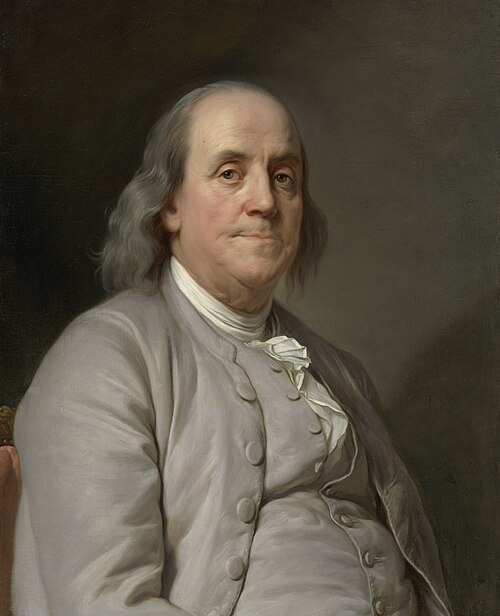
Benjamin Franklin, portrait by Joseph-Siffred DuplessisJoseph-Siffred Duplessis, 1778. Public domain. Wikimedia Commons. Image source
Benjamin Franklin organizes a fire company
1735 to 1736 · Benjamin Franklin (1706 to 1790)
In the 1700s, cities were packed with wooden buildings heated by open fires and candles. A small fire could destroy whole blocks.
In 1735 Benjamin Franklin, then a printer and newspaper publisher in Philadelphia, wrote a letter to his own paper about fire. He offered advice still quoted today: an ounce of prevention is worth a pound of cure. He urged people to carry hot coals safely and to keep chimneys clean.
In 1736 Franklin helped found the Union Fire Company. Each member kept leather buckets and bags at home, came when the alarm sounded and helped save goods from burning buildings. Members met regularly to plan and learn, an early form of training.
Franklin also helped start one of the first fire insurance companies in North America, which encouraged safer building.
Prevention, public education, training and teamwork remain the foundation of firefighting today.
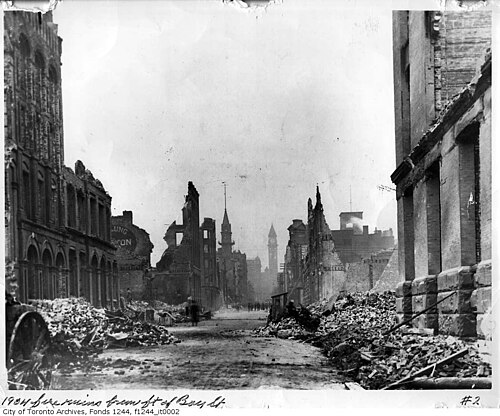
Ruins after the great Toronto fire of 1904William James, 1904. Public domain. Wikimedia Commons. Image source
The Great Toronto Fire of 1904
19 to 20 April 1904 · Toronto firefighters and crews from other cities
On the evening of 19 April 1904, a fire broke out in a factory on Wellington Street West in Toronto. Strong winds and freezing weather made it spread fast.
The fire jumped from building to building in the warehouse district. Water pressure was low and some equipment froze. Toronto called for help, and fire crews came by train from Hamilton, London, Buffalo and other cities.
Firefighters worked through the night, pumping water from Toronto Bay and trying to stop the fire at wide streets. By the next morning, the fire was under control. About 100 buildings had burned. Remarkably, no one died during the fire itself, though thousands of people lost their jobs while businesses rebuilt.
Afterward Toronto improved its fire department and water supply, and new rules pushed for more fire-resistant building materials.
The fire is a reminder of why modern firefighters study building construction, water supply, weather and mutual aid between departments.